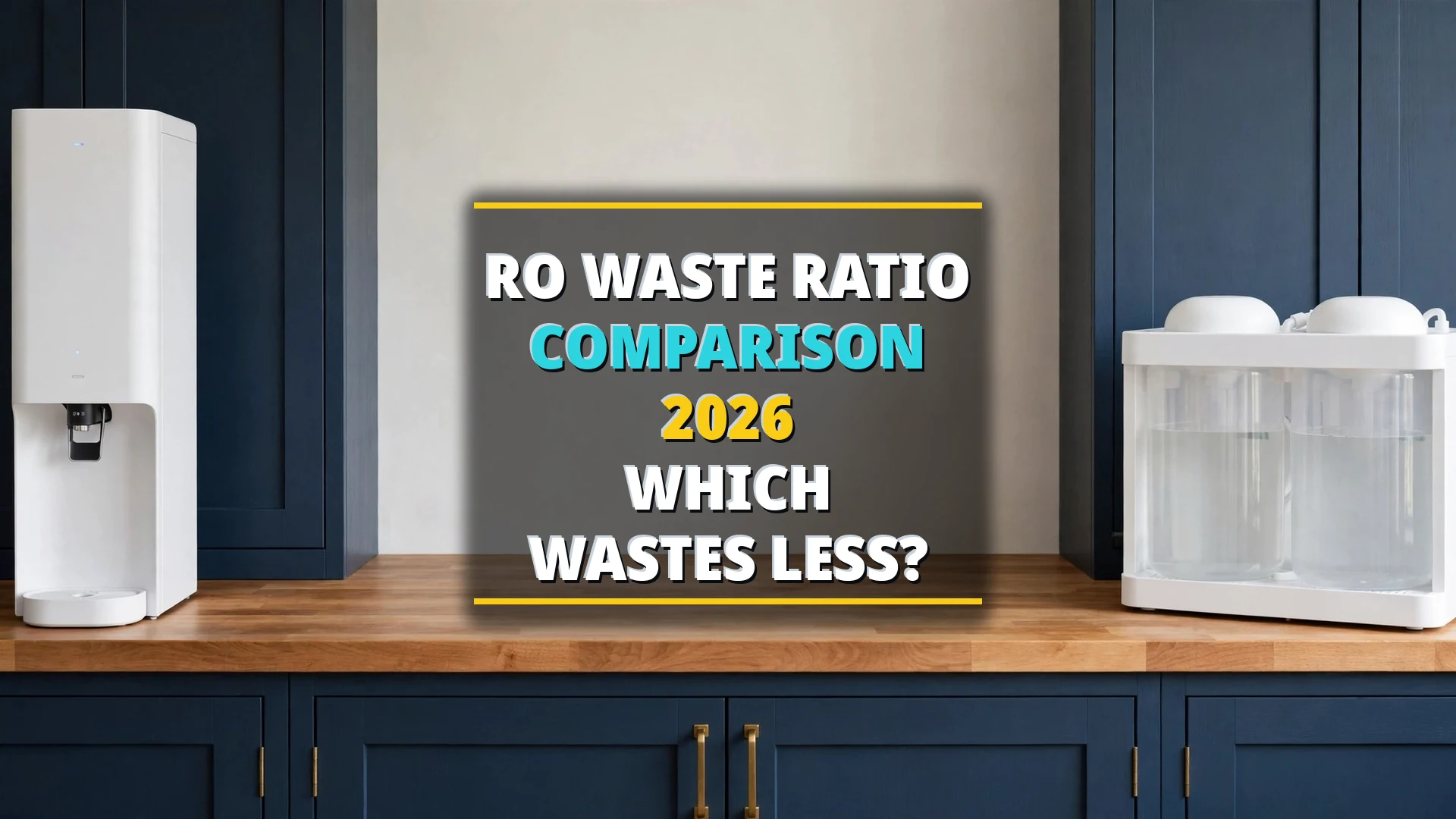

RO Waste Ratio Comparison (2026): Compared & Ranked
You are comparing countertop reverse osmosis systems and one spec keeps popping up everywhere: waste ratio. 4:1. 3:1. 2:1. Every brand flashes its number like a trophy — but nobody explains what the number actually means for your water bill, how often you will be dumping the waste tank, or whether the “winner” is really better. And when you dig in, the numbers do not always agree: one review says 4:1, the brand’s own FAQ says something closer to 3:1. Which number do you trust?
Here is the short answer: across the six popular countertop RO units we researched and compared, the real-world spread is bigger than the marketing suggests — roughly 4:1 at the efficient end down to about 1.7:1 at the thirsty end. For a household that drinks and cooks with about 1.5 gallons a day, that is the difference between roughly 138 and 324 gallons sent down the drain per year. If the waste ratio is your top criterion, the SimPure Y7P (stated 4:1) sits at the top of this ranking; if you want the cheapest filters too, the Waterdrop K19-SFK is the budget standout. This comparison ranks all six by their pure-to-drain ratios, shows the math behind the numbers, and flags exactly where the brands’ claims disagree — so you can buy with open eyes.
The certified runner-up
AquaTru Classic
~$449–475
4:1 claimed, but the brand’s own FAQ efficiency figures work out to about 3:1 — and it carries the most broadly reported certifications of the six.
The lowest-waste pick
SimPure Y7P
~$330–400
Top of this ranking at a stated 4:1 pure-to-drain ratio — roughly 138 gallons wasted a year at 1.5 gallons a day.
Quick verdict
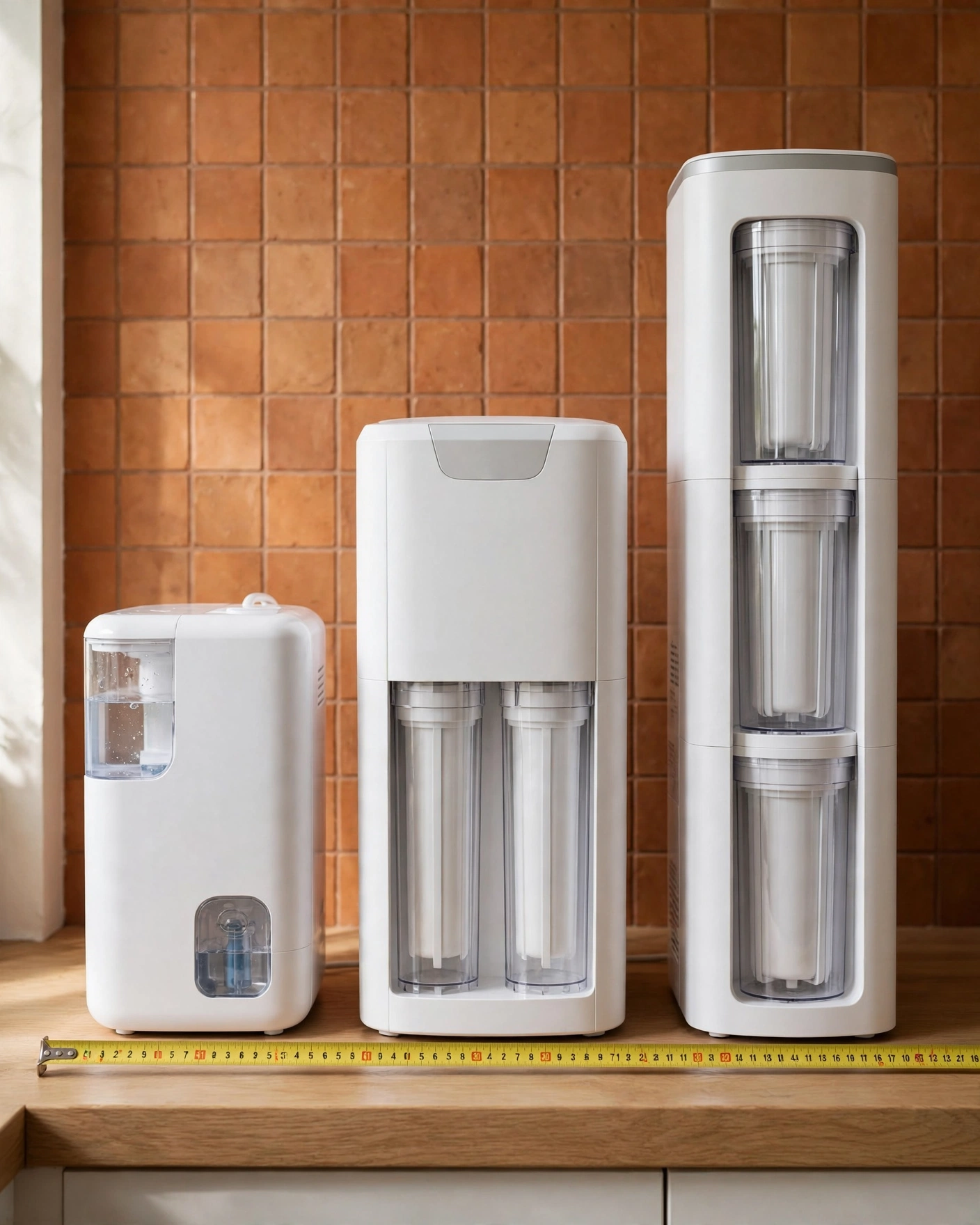
Six countertop RO systems, ranked purely by how much water they waste. The pattern is clear: slim dispenser-style units and compact carafe models tend to waste more; the bigger tanked units with recirculating designs waste less.
| Rank | Unit | Pure-to-drain ratio | Price (estimate) |
|---|---|---|---|
| 1 | SimPure Y7P | 4:1 stated | ~$330–400 |
| 2 | AquaTru Classic | 4:1 claimed / ~3:1 per brand’s own efficiency figures | ~$449–475 |
| 3 | Waterdrop K19-SFK | ~3:1 (calculated) | ~$320–380 |
| 4 | Bluevua RO100ROPOT | 3:1 listed / 2:1 in independent tests | ~$230–410 |
| 5 | Waterdrop A1 | 2:1 stated | ~$450–550 |
| 6 | AquaTru Carafe | ~1.7:1 per brand’s own efficiency figures | ~$375–395 |
The takeaway in one line: the SimPure Y7P and AquaTru Classic sit at the efficient end; the compact AquaTru Carafe and Waterdrop A1 waste the most per gallon purified. Prices are estimates at the time of writing — they change often.
Our scores
Table of Contents
Side-by-side comparison
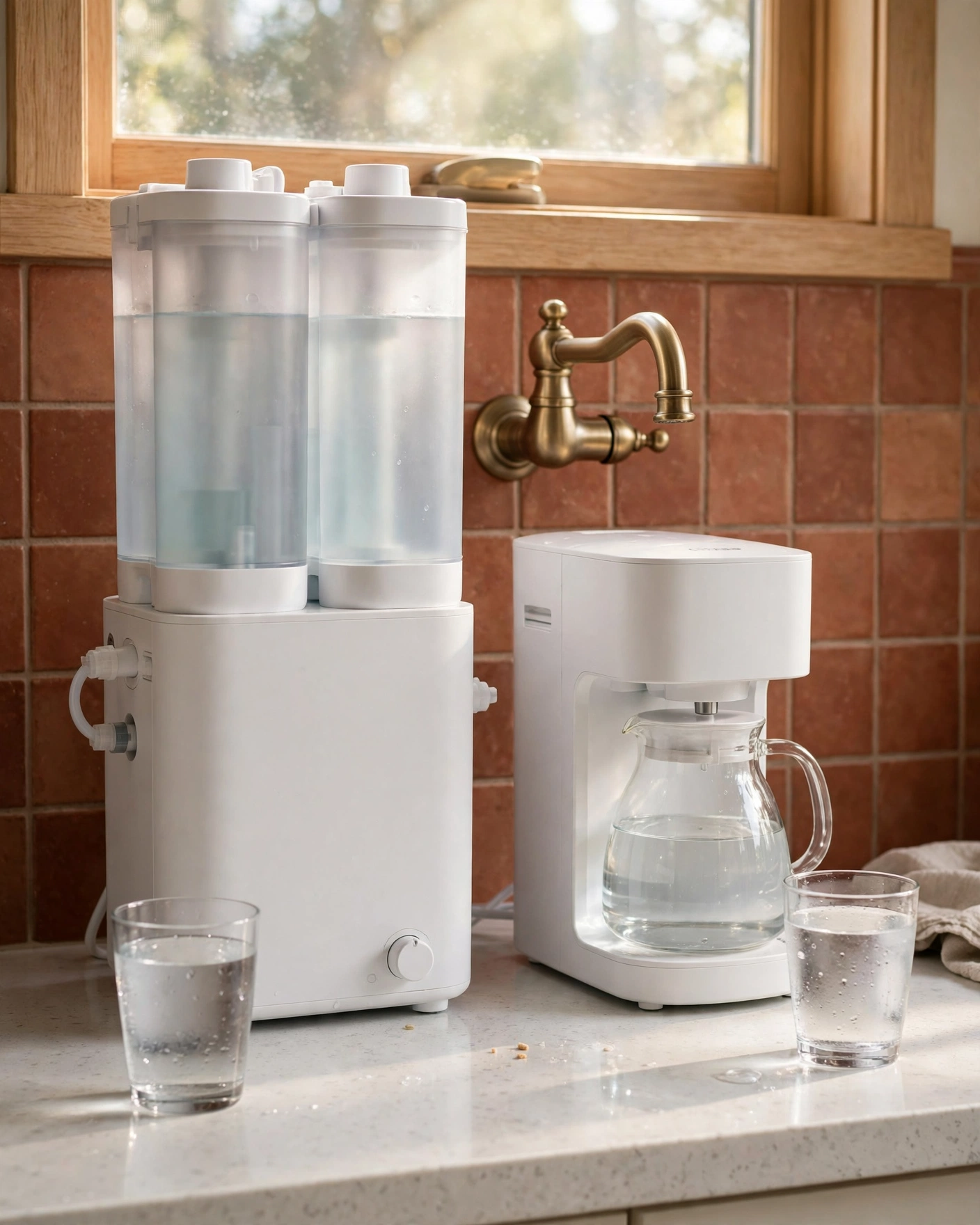
First, a quick lesson on reading the ratio. A 4:1 pure-to-drain ratio means 4 gallons of purified water for every 1 gallon sent to the waste tank. Flip that and you get a conventional under-sink RO at 1:4 — one gallon purified, four wasted. The higher the first number, the less water wasted.
The full comparison
Waste is not a design flaw — it is how reverse osmosis works: a stream of water carries rejected solids off the membrane. Every ratio below is attributed to its source, because the brands and the independent testers do not always agree:
| Unit | Ratio (pure:drain) | Source of the number | Price (estimate) | |
|---|---|---|---|---|
| SimPure Y7P ★ Winner | 4:1 | Brand listing + independent testers | ~$330–400 | Check price |
| AquaTru Classic | 4:1 claimed; ~3:1 per brand’s own FAQ figures | Brand claims 4:1; AquaTru’s own FAQ states 75% efficiency, which works out to 3:1 | ~$449–475 | Check price |
| Waterdrop K19-SFK | ~3:1 | Calculated from the maker’s stated ratio (3.3 gal drain per 10 gal purified) | ~$320–380 | Check price |
| Bluevua RO100ROPOT | 3:1 listed; 2:1 in independent tests | Product listings state 3:1; lab-style testers measured closer to 2:1 | ~$230–410 | Check price |
| Waterdrop A1 | 2:1 | Brand manual + independent testers agree | ~$450–550 | Check price |
| AquaTru Carafe | ~1.7:1 | AquaTru’s own FAQ states 63% efficiency (63 parts pure to 37 parts waste); reviewers quote the brand’s 4:1 claim | ~$375–395 | Check price |
The AquaTru-versus-Bluevua matchup deserves its own deep dive — see our AquaTru vs Bluevua waste ratio comparison for the full head-to-head, and our best countertop RO roundup if you want performance ranked alongside waste.
Certifications
Waste ratio tells you how much water a unit drains. Certifications tell you what it actually removes. The two are unrelated — and that is where this section matters, because a low-waste unit with weak contaminant reduction is a bad trade.
What we found at the time of writing — with the honest caveat that none of these listings were re-checked in the certifier databases before publish (IAPMO, WQA, and NSF all run public databases — always verify a claim there before you buy):
- AquaTru Classic and Carafe: the brand states its purifiers are independently tested by IAPMO to NSF standards, and third-party reviewers report IAPMO certification covering lead, PFOA/PFOS, and dozens of other contaminants.
- SimPure Y7P: listed as NSF 58 in product data — the standard covering reverse osmosis systems. Not re-verified at publish.
- Waterdrop A1: listed as NSF/ANSI 58 in product data. Not re-verified at publish.
- Bluevua ROPOT-Lite (UV): one detailed reviewer reports WQA certification to NSF/ANSI 58, but only for TDS, cadmium, and trivalent chromium — a much narrower scope. Not re-verified at publish.
- Waterdrop K19-SFK: no certification listing found at the time of writing. Fine on treated city water for many buyers; if lead or PFAS is your concern, a certified unit is the safer pick.

Cost per year
Waste water has two costs: the water itself and the chore of emptying the tank. Let us put numbers on both, assuming a household that drinks and cooks with about 1.5 gallons a day (roughly 550 gallons a year).
Gallons down the drain per year
| Ratio (pure:drain) | Wasted per year at 1.5 gal/day | Units in this band |
|---|---|---|
| 4:1 | ~138 gallons | SimPure Y7P, AquaTru Classic (claimed) |
| 3:1 | ~183 gallons | AquaTru Classic (brand FAQ math), Waterdrop K19-SFK |
| 2:1 | ~275 gallons | Bluevua ROPOT (tested), Waterdrop A1 |
| ~1.7:1 | ~324 gallons | AquaTru Carafe (brand FAQ math) |
Perspective check: at typical US municipal water rates of roughly a cent or two per gallon, even 324 wasted gallons costs only a few dollars a year. The real cost of a thirsty ratio is the chore — more frequent tank emptying — plus the environmental nag in drought regions. On a well with limited supply, though, the waste adds up fast.
Filter costs per year
Filters dwarf water costs. Estimated yearly filter spend at the same 1.5 gal/day usage, calculated by World Water Reserve from each maker’s filter prices and replacement intervals (their estimates, re-verify at publish):
| Unit | Est. filters per year | Est. cost per gallon |
|---|---|---|
| Waterdrop K19-SFK | ~$79 | ~$0.14 |
| SimPure Y7P | ~$100 | ~$0.18 |
| Bluevua ROPOT-Lite (UV) | ~$114 | ~$0.21 |
| AquaTru Classic | ~$130 | ~$0.24 |
| AquaTru Carafe | ~$188 | ~$0.34 |
The cheapest unit to buy (the K19-SFK) is also the cheapest to own — a rare combination. The AquaTru Carafe costs the most per gallon because its filters are rated for about half the gallons of the Classic’s, so they get replaced twice as often. Want the full explainer on how these numbers are derived? Read our reverse osmosis waste ratio guide.

Owner voices
Specs tell one story; living with a unit tells another. The recurring themes from owner forums and long-term reviews:
- Emptying the waste tank is the #1 chore complaint. The thirstier the ratio, the more often you are carrying a tank to the sink. Owners of compact carafe-style units report emptying after nearly every full cycle — while tanked-unit owners often go days.
- Do not “save” water by reusing the concentrate. AquaTru’s own FAQ is explicit: always discard the residual water before refilling, because it carries concentrated impurities that can clog the unit — and ignoring this can void the warranty.
- Wastewater is safe for non-drinking uses. The most common owner hack is watering houseplants, mopping floors, or pre-rinsing dishes with the reject water. It is just your tap water with the minerals concentrated — fine for a ficus, not for a glass.
- Filter cost surprises hurt more than water waste. The recurring owner grumble is not the drain ratio at all — it is discovering that replacement cartridges cost $100–190 a year. Budget the filters, not the water.
Renting and worried about a unit that wastes a lot on a shared water bill? Our portable RO picks are chosen with renters in mind.

Which should you buy?
Ranked purely by waste ratio: the SimPure Y7P takes the top spot at a stated 4:1, with the AquaTru Classic right behind (though the brand’s own efficiency figures suggest its real number is closer to 3:1). The Waterdrop K19-SFK is the value play: roughly 3:1 efficiency with the cheapest yearly filter cost of the group. The Bluevua RO100ROPOT is the one to double-check before buying — listings say 3:1, independent testers measured 2:1. The Waterdrop A1 sits at 2:1 but bundles hot and cold dispensing, so the waste buys convenience. And the compact AquaTru Carafe lands last on pure efficiency at roughly 1.7:1 by the brand’s own figures — small and stylish is not the same as efficient.
One last piece of honest perspective: at normal household use, the difference between the best and worst ratio costs only a few dollars a year in actual water. Buy the efficient unit if you are on a well, in a drought region, or hate emptying the tank — but if certified contaminant reduction is your goal, weigh the certifications section above the ratio ranking.
- 1. SimPure Y7P — lowest stated waste ratio (4:1), solid mid-range price. Check price
- 2. AquaTru Classic — efficient and the most broadly reported certifications. Check price
- 3. Waterdrop K19-SFK — cheapest to buy and cheapest to run. Check price
- 4. Bluevua RO100ROPOT — glass carafe and UV, but verify the ratio yourself. Check price
- 5. Waterdrop A1 — 2:1 waste, but instant hot + cold water. Check price
- 6. AquaTru Carafe — compact and pretty, thirstiest of the group. Check price
FAQs
What does a 4:1 RO waste ratio mean?
It means the system produces 4 gallons of purified water for every 1 gallon it sends to the waste tank. The ratio is written pure-to-drain: a bigger first number means less waste. A conventional under-sink RO at 1:4 is the mirror image — 1 gallon purified, 4 wasted.
Do countertop RO systems waste more or less water than under-sink ones?
Generally less. Old under-sink RO systems run around 1:4 (four gallons wasted per gallon purified), while the countertop units in this comparison range from about 4:1 down to 1.7:1. Modern tankless under-sink systems with booster pumps can match countertop efficiency, but the classic tank-style under-sink unit is the thirstiest design of all.
Can I drink the RO wastewater?
No. The reject stream is your tap water with the removed contaminants concentrated in it — the opposite of what you want in a glass. It is perfectly usable for watering plants, mopping floors, or pre-rinsing dishes, but it should never go back through the filters either: brands warn that reusing concentrate can clog the unit and void the warranty.
Does a better waste ratio mean worse filtration?
Not necessarily. The waste ratio measures water efficiency, not contaminant removal — a unit can be both efficient and well-certified. Judge filtration by certification listings in the IAPMO, WQA, or NSF databases, and judge efficiency by the ratio. They are two separate specs.
How can I reduce RO water waste at home?
Three practical moves: choose a unit with a strong pure-to-drain ratio (4:1 or 3:1) in the first place, reuse the reject water for plants and cleaning instead of pouring it down the sink, and keep the unit maintained — a neglected, scaled-up membrane wastes more water over time. If you are on a well or in a drought region, the ratio should be near the top of your buying criteria.
Conclusion
Waste ratio is the one countertop RO spec where the marketing numbers and the real math visibly disagree — and that disagreement is exactly why this comparison exists. Ranked on the best available evidence, the SimPure Y7P and AquaTru Classic lead on efficiency, the Waterdrop K19-SFK leads on yearly cost, and the compact carafe-style units trade efficiency for counter space. None of these ratios will make or break your water bill, but they decide how often you empty the tank and how you feel about every gallon. Pick the ratio that matches your water situation, verify the certifications in a certifier database before you buy, and put the wastewater on your plants.
- Zulqarnain: Review published.